


close
Choose Your Site
Global
Social Media

Views: 0 Author: Site Editor Publish Time: 2026-01-13 Origin: Site


Dusty air is a common challenge in industrial environments. Can Centrifugal fans effectively manage such conditions without losing performance? In this article, we'll explore how Centrifugal fans handle dusty air, what types of dust they can manage, and the best solutions to ensure long-term efficiency. You'll learn about the factors that influence their performance and how to optimize them for dusty conditions.
Centrifugal fans work by utilizing a rotating impeller to draw air into the fan and then expel it at a 90-degree angle. As the air enters the fan, it is rapidly accelerated by the impeller's motion, increasing its pressure. The fan housing, designed like a volute, directs the air through ducts or exhausts. This mechanism makes centrifugal fans highly effective in systems requiring high pressure, such as dust collection and ventilation systems.
When dust particles are introduced into the airflow, they significantly alter its behavior. In a clean airstream, air flows predictably along the blade profile, but the introduction of particulates causes irregularities in the flow pattern. Larger particles tend to deviate from the streamlines, leading to collisions with fan components. These collisions can reduce airflow efficiency, causing turbulence and clogging, ultimately impacting the fan’s performance.
Dust particles interact with the blades and casing of centrifugal fans in various ways, potentially leading to damage. Abrasive particles can cause erosion, particularly on the leading edges of the blades. The dust buildup can also create imbalances, leading to vibration and wear on bearings. Over time, the accumulation of dust can reduce the fan's operational efficiency and lifespan. Implementing proper filtration and maintenance systems helps mitigate these risks.
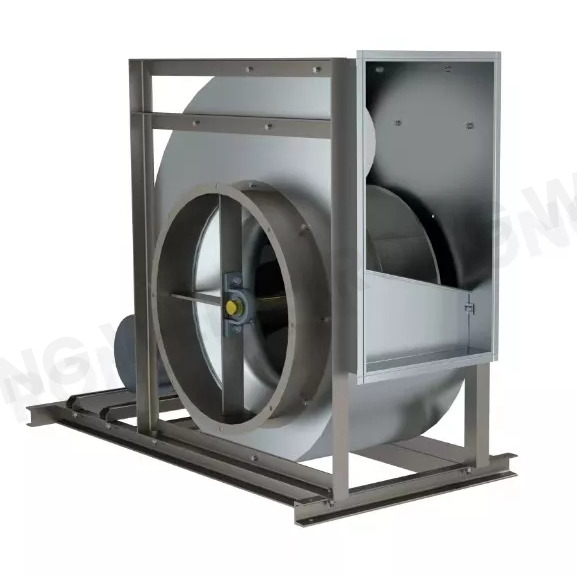
The following table compares Light Dust and Heavy Dust in terms of their impact on centrifugal fan performance. It highlights key differences in handling, potential risks, and maintenance considerations for each dust type.
| Dust Type | Examples | Impact on Fan Components | Energy Consumption | Maintenance Considerations | Required Fan Design Features |
|---|---|---|---|---|---|
| Light Dust | Flour, fine powders, sand | Minimal wear, no significant erosion | Slight increase in energy usage due to air resistance | Regular cleaning to avoid minor accumulation, less frequent maintenance required | Less robust fan blades, lower pressure tolerance |
| Heavy Dust | Cement dust, wood chips, metal shavings | Rapid erosion, potential for imbalances and bearing wear | Significant increase in energy consumption due to clogging and friction | Frequent inspection and cleaning, replacement of worn components | Reinforced fan blades, higher static pressure capacity |
Centrifugal fans are commonly used in industries such as woodworking, mining, cement production, and pharmaceuticals. In woodworking, fans handle fine sawdust, while in cement plants, they manage larger, abrasive particles like clinker dust. These fans are also critical in mining operations where dust from crushed ores needs to be removed. In all of these cases, the fans must be designed to handle different particle sizes and dust concentrations effectively.
While centrifugal fans can handle dusty air, they have limits. The concentration of dust and the size of particles determine how well a fan performs. High concentrations of fine dust can accumulate on blades, reducing airflow and efficiency. In contrast, large, abrasive particles can cause immediate damage. It is crucial to assess the specific dust conditions of each environment and select fans designed to withstand those conditions.
The following table summarizes the key applications, technical specifications, and considerations of Radial Blade Fans, helping users make informed decisions when selecting the right fan for specific environments.
| Application Scenarios | Main Features | Efficiency | Performance | Technical Specifications | Considerations |
|---|---|---|---|---|---|
| Heavy material handling (e.g., cement, wood chips) | Ideal for high concentrations of coarse dust | 60%-65% | Good | Blade Width: 10-50 cm; Air Pressure: High static pressure | Requires regular cleaning due to dust accumulation |
| Dust handling (e.g., coal ash, crushed ores) | Self-cleaning feature, effective at expelling solid particles | 60%-65% | Effective | Airflow: 2,000-30,000 m³/h; Pressure: Max 16,000Pa | Needs to avoid excessive dust buildup, regular maintenance is key |
| Harsh environments (e.g., glass manufacturing, steel plants) | Durable, capable of long-term use in harsh conditions | Lower than traditional fans | High durability, long lifespan | Motor Power: 7.5kW to 45kW; Material: High-strength steel | Focus on blade and frame protection during use |
Tip: For heavy dust and abrasive environments, be sure to perform regular maintenance, as dust accumulation can significantly affect fan longevity.
Backward curved fans are highly efficient and are suitable for applications where dust is less abrasive but still present. These fans offer moderate tolerance to dust and are commonly used in systems where a balance between efficiency and dust tolerance is required. While backward curved fans perform well in light dust environments, they may experience dust buildup in the pockets of the blades under heavy dust conditions, which can affect their performance.
Airfoil and forward curved fans are designed for high-efficiency applications and are best suited for clean, dry air. However, in dusty environments, these designs may face significant challenges. Airfoil fans, with their smooth, aerodynamic blades, are highly sensitive to dust accumulation, which can disrupt airflow and cause efficiency losses. Forward curved fans, while compact and functional in smaller systems, are also prone to clogging and are generally not recommended for dust-heavy applications.
The following table presents the different options for Impeller Material and Design and their impact on fan performance, helping users understand how different materials and designs affect dust handling efficiency.
| Impeller Material and Design | Main Features | Efficiency | Performance | Technical Specifications | Considerations |
|---|---|---|---|---|---|
| Stainless Steel Impeller (304/316) | Strong corrosion resistance, ideal for humid or chemical environments | 70%-80% | Versatile | Fan Diameter: 0.6m-2m; Temperature Resistance: Up to 250°C | Higher cost, suitable for applications requiring high hygiene standards |
| Aluminum Impeller | Lightweight, corrosion-resistant, ideal for low-load environments | 70%-75% | Good for clean air | Material: Aluminum Alloy; Airspeed: Above 10 m/s | Suitable for low-dust environments but not for high temperature or high wear |
| Composite Material Impeller | Strong wear and corrosion resistance, suitable for harsh chemical environments | 80%-90% | High durability and corrosion resistance | Air Pressure: Max 15,000Pa; Operating Temperature: -40°C to 150°C | Expensive; must consider environment requirements and installation space |
| Chromium-plated or Hardened Steel Impeller | High wear resistance, suitable for handling high concentrations of dust | 65%-75% | Suitable for high-wear environments | Air Pressure: Max 20,000Pa; RPM: 500-1500 RPM | Regularly check the impeller surface to prevent damage from wear layer detachment |
Tip: When selecting impeller materials, adjust based on specific dust concentrations, temperature, and corrosiveness of the environment to ensure long-term stable operation.
The angle and design of the blades influence the fan's ability to manage dust. Radial blades, with their straightforward design, handle heavy dust well, while backward curved blades are better for cleaner air but can accumulate dust under heavy load. Forward curved blades, though efficient at moving large volumes of air, are highly susceptible to dust buildup. Selecting the right blade angle for a given application is essential for maintaining long-term efficiency.
The rotational speed of a centrifugal fan impacts its ability to handle dust. As the fan speed increases, so does the centrifugal force, which helps to expel dust more effectively. However, excessive speed can lead to erosion and imbalances, especially in dusty environments. It is important to select the correct fan speed based on the amount of dust and the specific needs of the system to prevent excessive wear and energy consumption.
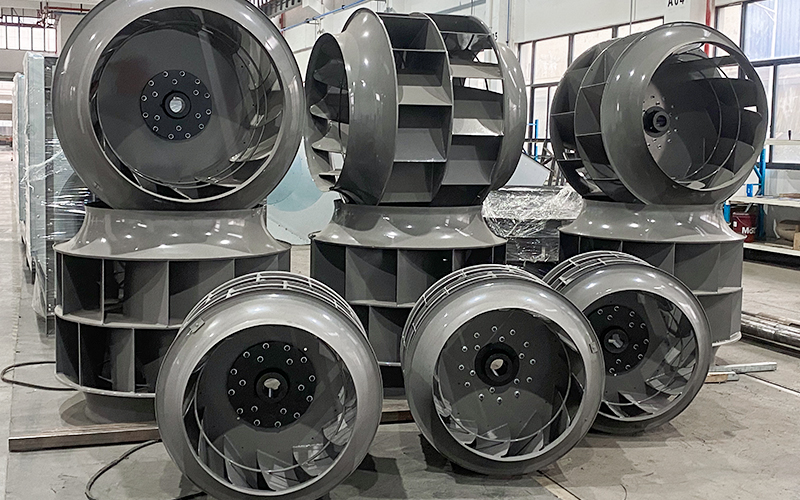
Integrating filtration systems with centrifugal fans is a practical solution to improve dust handling. Pre-filters can capture larger particles before they enter the fan, while secondary filters can prevent finer dust from causing damage. Using high-efficiency particulate air (HEPA) filters can ensure that even the smallest particles are captured, preventing them from interfering with fan operation.
Routine maintenance and cleaning are essential for keeping centrifugal fans operating efficiently in dusty environments. Cleaning the fan blades and housing regularly helps prevent dust accumulation, which can cause imbalances and reduce airflow. Regular inspections ensure that any potential issues, such as wear or clogging, are addressed before they lead to system failure.
In highly abrasive environments, applying wear-resistant coatings or installing sacrificial wear plates can significantly extend the lifespan of centrifugal fans. Coatings such as ceramic or hardfacing materials protect the fan’s components from the damaging effects of dust particles. These solutions help maintain the fan's performance by reducing the impact of continuous dust exposure.
When selecting centrifugal fans for dust collection systems, it is important to consider the type of dust, the volume of air to be handled, and the system's pressure requirements. Fans designed specifically for dust extraction will have features like reinforced blades and efficient filtration systems to handle the load. Understanding the environmental conditions and dust properties is key to making the right choice.
The performance of centrifugal fans is closely tied to the overall design of the dust collection system. Properly designed ductwork, efficient filters, and well-maintained fans work together to ensure optimal air quality. It is crucial to integrate the fan into the system thoughtfully, considering factors like airflow resistance and dust load.
In dusty environments, common issues include reduced airflow, energy inefficiencies, and increased wear. Dust buildup on fan blades can lead to vibration and imbalance, affecting the system's overall performance. Addressing these problems requires a comprehensive approach, including fan selection, maintenance, and proper filtration.
Centrifugal fans are designed to handle dusty air, but their performance is closely tied to their design and maintenance. Choosing the right fan based on the dust type and environment is crucial. Zhejiang Rongwen Fan Co., Ltd. offers high-quality centrifugal fans that are engineered to withstand heavy dust loads and provide reliable performance. Their fans feature reinforced blades and efficient filtration systems, ensuring long-lasting, efficient operation even in challenging environments.
A: Yes, Centrifugal fans can handle dusty air, but their efficiency depends on factors like dust type and concentration. Proper design and maintenance are crucial for optimal performance.
A: Dust can cause clogging, erosion, and imbalance in a Centrifugal Fan. This reduces airflow and efficiency, making regular maintenance essential to prevent damage.
A: Centrifugal Fans can handle light dust like flour or fine powders and heavier, abrasive dust like cement or wood chips. The right fan design should be chosen based on the dust type.
A: Dust accumulation can lead to wear, vibration, and reduced efficiency. Regular cleaning and inspection of Centrifugal Fans ensure long-term performance and prevent costly failures.
A: Choose a Centrifugal Fan with appropriate blade design and material for your specific dust type. Radial blade fans are ideal for heavy dust, while backward curved fans work well for lighter dust.


