
Views: 0 Author: Site Editor Publish Time: 2026-11-25 Origin: Site


In a sprawling chemical processing plant, a single stalled blower can bring the entire production line to a grinding halt. When industrial systems must push air or hazardous gases through miles of restrictive piping, standard ventilation equipment often hits a wall. These ordinary fans lose the ability to move air entirely once they encounter intense resistance from dense filter banks or heavy bulk materials. For facility engineers, this is a persistent, costly hurdle that demands a more sophisticated approach.
Overcoming these aggressive friction losses requires a specialized strategy. However, relying on a single oversized unit is rarely the answer. Pushing one massive impeller to its structural limit leads to poor energy efficiency and risks catastrophic mechanical failure. Instead, seasoned engineers turn to staging. By placing multiple units in a sequential line, you can multiply the system's pressure capacity while maintaining steady, reliable flow. This guide explores how sequential staging improves performance, covering the mechanics of performance curves, the impact of shifting air densities, and strategic design factors for demanding environments.
Multiplied Force Without Flow Loss: Sequential staging doubles your pressure capabilities while keeping volumetric airflow constant.
Efficiency Through Staging: A multi-tiered configuration is more energy-efficient and mechanically stable than a single, oversized impeller.
Mapping Performance: Careful analysis of the performance graph is essential to prevent stalling, surging, and system vibrations.
Built for Extremes: This setup is vital for high-friction applications like long-distance pneumatic conveying and deep-level mining ventilation.
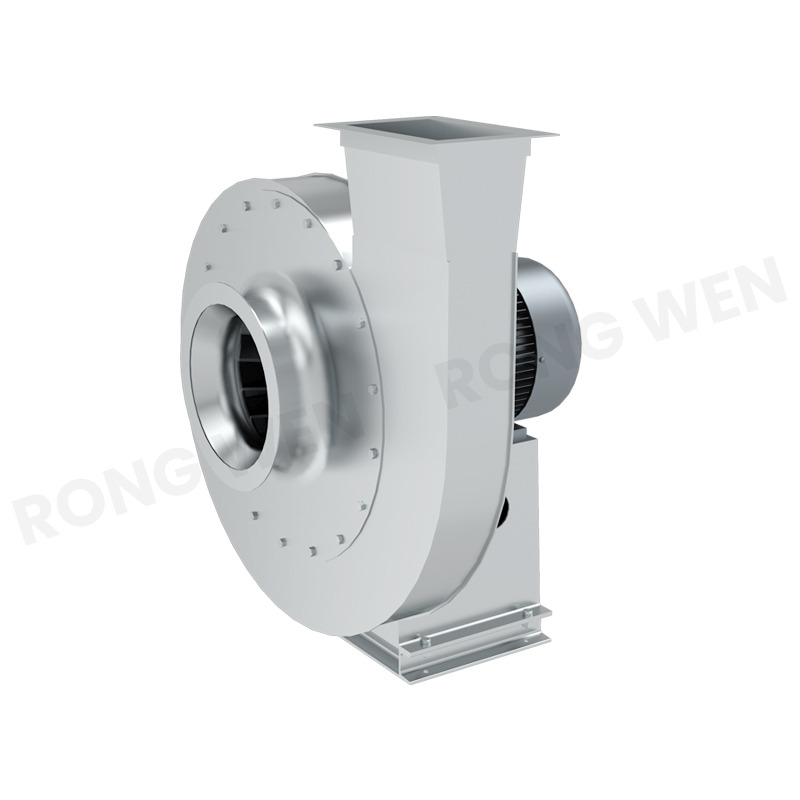
The mechanical architecture of a High Pressure Fan is a far cry from standard HVAC blowers. These machines feature narrower wheel widths and larger diameters, with reinforced impellers engineered to endure high rotational speeds. As the impeller spins, it violently accelerates incoming air, generating kinetic energy that the volute housing compresses into concentrated force. Because of these stresses, manufacturers use heavy-duty carbon steel or specialized alloys to prevent blade deformation during high-speed operation.
In industrial aerodynamics, resistance is the primary enemy. Whether the challenge is winding ductwork, dense filter media, or wet scrubbers, this resistance creates a physical barrier. Without sufficient force, the air stream stagnates, leading to total system collapse and material blockages. Understanding the critical role of Static Pressure is therefore the first step toward building a reliable processing line.
In a sequential configuration, the exhaust discharge of the first unit is piped directly into the intake of the next. The logic is simple yet effective: the first blower pressurizes the air, and the second takes that compressed air to push it even further. When machines are matched correctly, the total pressure output is effectively doubled.
It is important to distinguish this from parallel operation. While a parallel setup involves two blowers drawing from the same source to increase total volumetric airflow, Series Operation focuses entirely on boosting the pressure threshold. Choosing the wrong configuration for a high-friction application will inevitably lead to operational failure. Facility managers must look closely at their system resistance before determining which setup fits their needs.
Recent shifts in industrial requirements have made sequential staging more relevant than ever. As environmental regulations tighten, facilities are implementing denser HEPA filtration and aggressive scrubbers, which inherently increase system resistance. Furthermore, as resource extraction moves into deeper, more remote environments, ventilation systems are being pushed to their limits. Single-stage configurations are becoming obsolete in these extreme-duty applications, leaving staging as the standard for maintaining compliance and safety.
Beyond meeting regulations, this approach solves the "tip speed" dilemma. Attempting to force a single impeller to overcome high resistance often requires rotational speeds that exceed the physical limits of the material. By splitting the mechanical workload, staging keeps the system within safe structural parameters, preventing the fatigue that often causes blades to fail. This is not just a matter of performance, but a critical investment in equipment longevity.
Furthermore, running two smaller, standard motors is often more efficient than maintaining one colossal, custom-built motor. Large motors require complex electrical infrastructure to manage the inrush current during startup. With a staged setup, you can start motors in a sequence, reducing the peak electrical load on your facility’s grid and optimizing overall energy consumption.
A Fan Curve provides the visual roadmap needed to understand how your system behaves. When you place two identical blowers in series, you are essentially doubling the resistance values on the vertical axis while the maximum volume remains consistent. This allows engineers to push through barriers that would otherwise stall a single-stage system.
However, this requires precise calculation regarding your system’s unique friction curve. If you underestimate your resistance, the operating point shifts too far left, which can trigger aerodynamic surging. In this state, air rapidly reverses direction within the housing, creating vibrations that can shatter bearings in a matter of minutes. Balancing the curve with the system's actual demand is essential for stable, long-term operation.
A Multi Stage blower is essentially a sequential operation integrated into one housing. Instead of external ducting, these units use internal baffles to direct air from one impeller to the next. This is a brilliant solution for space-constrained facilities, though it offers different trade-offs compared to standalone units.
| Feature | Integrated Multi-Tier Fan | Separate Standalone Fans |
|---|---|---|
| Space Requirements | Highly compact; minimal floor footprint. | Requires more room and connecting ductwork. |
| System Redundancy | Low. A shaft failure stops the entire unit. | High. One unit can often maintain partial flow. |
| Maintenance | Requires total housing disassembly. | Easier to service components individually. |
Pneumatic conveying is one of the most common applications for staged blowers. Transporting abrasive materials like plastic pellets or cement requires high-velocity air to keep these heavy particles in suspension. Without the compounded force of a staged system, these materials would drop out and clog the pipelines. The same holds true for deep-level mining ventilation, where fresh air must be pushed through miles of shaft, or for petrochemical plants needing to force gas through dense catalytic converters.
In combustion and boiler drafts, the precision of air delivery is critical. Even a minor drop in pressure can compromise the fuel-to-air ratio, leading to inefficient combustion and harmful emission spikes. By utilizing a staged configuration, facilities ensure a constant, rigid supply of oxygen, stabilizing the burn and drastically reducing fuel waste over time.
Thermodynamics plays a major role in system design. As the first blower compresses the air, it naturally generates heat. This results in air entering the second blower at a higher temperature and a lower density. Because these are constant-volume machines, the secondary motor must be sized to handle this specific mass flow. Ignoring the heat of compression is a common oversight that leads to premature motor burnout.
Synchronization is equally vital. Using Variable Frequency Drives (VFDs) allows you to ramp up motors in a controlled, staggered sequence. If the secondary blower spools up faster than the primary, you risk creating a vacuum that could collapse the connecting ductwork. Additionally, ensure there is enough physical space—typically three to five duct diameters—between units. This distance allows turbulent exhaust air to stabilize before entering the next intake, which significantly reduces vibration and wear on the bearings.
No. Series staging is designed to increase pressure capabilities. The volumetric airflow remains consistent with a single unit. For increased CFM, you would need to explore parallel configurations.
Mismatched equipment often results in one unit working against the other. This creates severe aerodynamic turbulence and surging, which will quickly lead to motor failure and mechanical damage.
Compression increases air temperature, which changes the density of the gas entering the second unit. Engineers must calculate this density shift to prevent overloading the secondary motor.
The remaining unit will be forced to operate far outside its design parameters to compensate for the lost pressure. This typically causes an immediate stall or surge. It is highly recommended to include pressure sensors that trigger an emergency shutdown if one stage fails.
It depends on your maintenance priorities. An integrated unit saves space and simplifies installation, but separate units provide better redundancy and are generally easier to service without taking the entire system offline.
When your industrial process demands aggressive air delivery, sequential staging provides the most reliable path forward. By splitting the work, you ensure both mechanical safety and energy efficiency. We invite you to review your current system data and consult with our engineering team to design a durable, custom solution tailored to your facility's unique aerodynamic challenges.


