Introduction
Centrifugal fan are essential for moving air or gases in industrial systems. They help overcome resistance in applications like HVAC systems and dust extraction. These fans convert mechanical energy into air pressure, ensuring consistent airflow. In this article, we will discuss how centrifugal fans work, their key components, and their applications. You’ll learn how they maintain pressure and support various industrial processes.
What Is a Centrifugal Fan?
Definition and Basic Working Principle
A centrifugal fan uses centrifugal force to move air or gases. The fan’s impeller spins rapidly, creating a vacuum at its center. This vacuum pulls air into the fan, and centrifugal force pushes it outward toward the edges of the impeller. This outward motion causes the air to increase in velocity and pressure as it moves through the volute casing, ultimately being discharged at a higher pressure.
The key concept here is centrifugal force—essentially the force that pushes objects away from the center when they are rotating. As the impeller rotates, air is subjected to this force and accelerated outward. The fan’s casing directs the airflow and converts the kinetic energy into static pressure, which helps overcome resistance in duct systems.
Difference Between Centrifugal and Axial Fans
Centrifugal fans differ significantly from axial fans in terms of airflow and pressure generation. In an axial fan, air moves parallel to the fan’s axis, while in a centrifugal fan, air is drawn into the fan axially but is then expelled radially (perpendicular to the fan’s axis). This radial airflow allows centrifugal fans to generate higher static pressure, making them more effective in systems where resistance is high, such as HVAC ducts or air pollution control systems.
While axial fans are more efficient for moving large volumes of air at low pressures, centrifugal fans excel in situations where higher pressures are required.
Common Uses of Centrifugal Fans
The following table outlines the common uses of centrifugal fans in various applications, detailing key aspects such as technical specifications, precautions, effects, and safety requirements, helping readers understand how to choose and use centrifugal fans in different environments.
| Application Area | Main Function | Precautions | Technical Specifications | Effects | Safety Requirements |
| HVAC Systems | Move air through duct systems to maintain temperature control | Regular cleaning and inspection to prevent blockages | High static pressure, high airflow, suitable for complex ductwork | Stable temperature control and air circulation | Ensure electrical connections meet safety standards to prevent electrical failures |
| Dust and Fume Extraction | Remove harmful gases and dust in industrial settings | Replace filters regularly | High pressure, suitable for harsh environments | Effectively purify air, ensuring a safe working environment | Install protective devices to ensure operator safety |
| Industrial Drying Systems | Used in drying food products, textiles, and chemicals | Precise temperature and humidity control | Moderate airflow, high temperature resistance | Improved drying efficiency, reduced energy consumption | Avoid direct contact with high-temperature areas during operation |
Tip: To ensure the efficiency and safety of centrifugal fans in various applications, consider the fan's technical specifications and actual environmental needs. Regular maintenance and inspections are essential for long-term stable operation.
How Does a Centrifugal Fan Work?
The Air Intake Process
Air enters the centrifugal fan through the central inlet, which is aligned with the fan's rotational axis. This axial airflow is drawn in as the impeller spins, creating a low-pressure zone at the center of the fan. The continuous rotation of the impeller creates a constant suction force, pulling in more air and maintaining steady airflow.
The Role of the Impeller
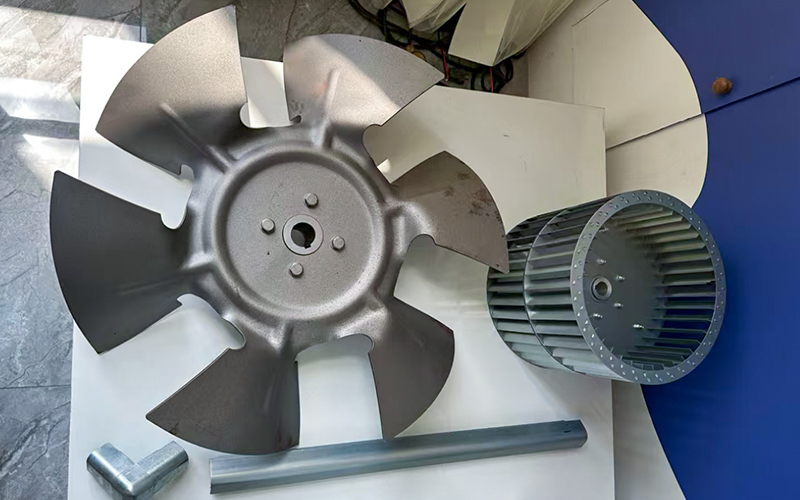
The impeller is the heart of a centrifugal fan. It is a rotating disk with blades that capture and accelerate the incoming air. As the impeller spins at high speeds, the blades push the air outward due to centrifugal force. This process increases the air's velocity and pressure. The speed of the impeller's rotation directly impacts how much air is moved and how high the pressure will be.
The Conversion of Kinetic Energy into Pressure
Once the air leaves the impeller, it enters the volute or scroll casing. This casing is designed to slow down the air while converting its kinetic energy into static pressure. As the air moves through the expanding casing, its velocity decreases, and the energy is transformed into increased pressure. This process is crucial for overcoming the resistance of ducts, filters, or other components in the airflow system.
Key Components of a Centrifugal Fan
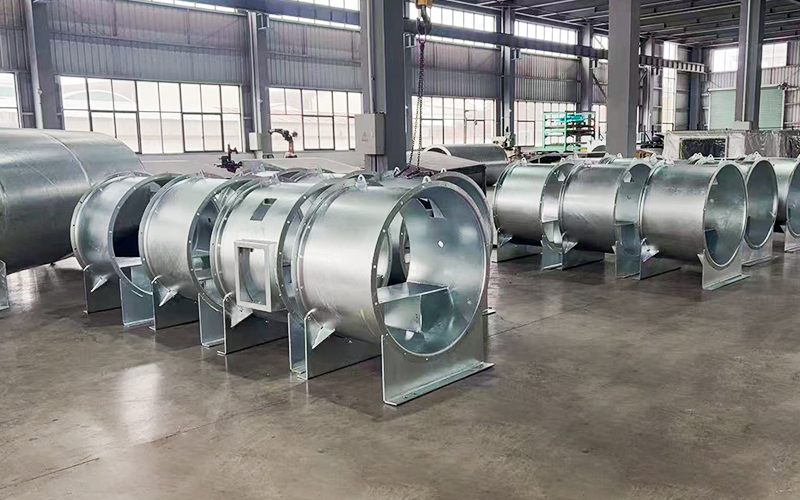
Impeller
The following table provides a detailed comparison of three types of fan impellers, covering their applications, precautions, technical specifications, effects, and safety considerations. This helps readers choose the most suitable impeller design based on their specific needs.
| Impeller Type | Application | Precautions | Technical Specifications | Effects | Safety Requirements |
| Forward-curved Impellers | Used in applications requiring high airflow at lower pressures, such as ventilation and air exchange | Suitable for low-speed operation; excessive speed may reduce efficiency | High airflow, low pressure, efficient at low speeds | Compact and efficient, suitable for simpler airflow needs | Ensure smooth operation, avoid contact with high-pressure areas |
| Backward-curved Impellers | Used in high-pressure applications such as industrial ventilation and air purification | Suitable for high-pressure environments; avoid overloading | High airflow, high pressure, efficient at high speeds | High efficiency and energy savings, suitable for complex environments | Regular maintenance and inspection to prevent impeller damage |
| Radial Impellers | Used for handling high-pressure environments and larger particles, such as dust collection | Less efficient than the other types, suitable for environments with high particulate matter | High pressure, moderate airflow, suitable for high concentration particles | Suitable for handling larger particles, durable in high-pressure environments | Prevent particle damage to impeller, ensure proper airflow |
Tip: When selecting an impeller for your application, consider airflow speed, pressure requirements, and environmental conditions. For high-pressure applications, backward-curved impellers are more efficient, while forward-curved impellers are ideal for low-speed and high-airflow needs.
Housing/Volute
The housing, or volute, is the casing that surrounds the impeller. Its primary function is to guide the air from the impeller to the discharge port. The shape of the housing—typically spiral or scroll—plays a significant role in converting the air’s kinetic energy into static pressure. The expanding shape of the volute helps reduce turbulence and improves efficiency.
Motor and Bearings
The motor powers the impeller, typically an electric motor that drives the blades either directly or through a belt and pulley system. The bearings support the rotating impeller and ensure smooth operation, minimizing friction and vibration. High-quality bearings contribute to the fan's longevity and reliable performance.
The Advantages of Centrifugal Fans
High Pressure Generation
One of the primary advantages of centrifugal fans is their ability to generate high static pressure. This makes them ideal for applications where air needs to be pushed through long ducts, filters, or resistance-heavy systems. The impeller's design and rotation speed are key factors in determining the fan's pressure capabilities.
Versatility and Efficiency
Centrifugal fans are highly versatile and can be used in a wide range of applications. From HVAC systems to industrial drying processes, they are suitable for environments with varying airflow and pressure demands. Furthermore, these fans maintain high efficiency even when working against considerable resistance, unlike axial fans.
Noise Reduction and Durability
Centrifugal fans tend to be quieter than axial fans, especially in closed systems where noise reduction is critical. Their design, including the enclosed impeller and volute casing, helps minimize sound. Additionally, centrifugal fans are durable and can handle harsh operating conditions, including high moisture or dusty environments.
Applications of Centrifugal Fans
HVAC Systems
Centrifugal fans are commonly used in HVAC systems to circulate air through ducts and provide ventilation. They are ideal for systems that require high static pressure, such as those with long duct runs or multiple filtration stages. These fans help maintain efficient airflow, even in resistance-heavy environments.
Dust and Fume Extraction
In industrial settings, centrifugal fans are vital for dust and fume extraction. They efficiently move air through filtration units, helping to maintain a safe and clean work environment. By pulling in contaminated air and forcing it through filters, centrifugal fans contribute to reducing airborne pollutants.
Industrial Drying Systems
In manufacturing industries, centrifugal fans play a crucial role in industrial drying systems by enhancing the moisture removal process. Whether used for drying food products, textiles, chemicals, or other materials, these fans ensure uniform airflow that promotes efficient moisture evaporation. By increasing air pressure and velocity, centrifugal fans help accelerate drying times, reduce energy consumption, and maintain consistent product quality, making them essential in industries like food processing, textile manufacturing, and chemical production where fast, uniform drying is critical.
Factors Affecting Centrifugal Fan Performance
Fan Blade Design
The design of the fan blades plays a crucial role in determining both the airflow and pressure generated by the fan. Blade shapes, such as forward-curved or backward-curved, impact how the air is accelerated and how much pressure is created. A well-designed blade ensures optimal performance and energy efficiency.
Speed and Motor Configuration
The speed at which the impeller rotates directly affects the fan's output. Faster rotation leads to higher air velocity and pressure. Additionally, the type of motor, whether direct-drive or belt-driven, influences efficiency and performance. Matching the motor's power to the system's needs is key to ensuring consistent and reliable operation.
Environmental Factors and Maintenance
External factors, such as ambient temperature, humidity, and air quality, can affect the fan’s performance. Regular maintenance, including cleaning and lubrication, is crucial for ensuring the fan operates efficiently. Over time, wear and tear can impact the fan’s ability to generate pressure, so routine inspections are essential for maintaining peak performance.
Conclusion
Centrifugal fans are essential for numerous industrial applications that require precise airflow control and high pressure. Their ability to overcome significant resistance makes them ideal for use in systems like HVAC, industrial ventilation, and dust extraction. By understanding their components and principles, businesses can make informed decisions to optimize performance. Zhejiang Rongwen Fan Co., Ltd. offers high-quality centrifugal fans tailored to meet diverse industry needs. With reliable performance and energy efficiency, their fans provide unmatched value in maintaining optimal operational environments.
FAQ
Q: What is a centrifugal fan?
A: A centrifugal fan uses centrifugal force to move air or gases. It accelerates air through a rotating impeller and expels it at a higher pressure.
Q: How does a centrifugal fan differ from an axial fan?
A: Unlike an axial fan, which moves air along the axis, a centrifugal fan expels air radially, generating higher static pressure and overcoming greater resistance.
Q: What are the advantages of using a centrifugal fan?
A: Centrifugal fans provide high pressure, efficient airflow, and are ideal for environments requiring air movement against resistance, such as HVAC and industrial systems.
Q: Why is the impeller design important in a centrifugal fan?
A: The impeller design affects airflow, pressure, and efficiency. Forward-curved impellers excel at high airflow, while backward-curved impellers work better at higher pressures.
Q: How do I maintain a centrifugal fan?
A: Regular cleaning, lubrication, and inspection of the motor and bearings are essential for maintaining the efficiency and longevity of a centrifugal fan.


