
Views: 0 Author: Site Editor Publish Time: 2026-06-27 Origin: Site


Selecting the wrong industrial ventilation equipment causes major operational issues. It results in compromised system efficiency, excessive noise, and inflated energy budgets. Poor choices quickly drain your operational resources and harm facility productivity. Centrifugal blowers often dominate high-pressure scenarios across heavy manufacturing. However, Axial Fans provide the necessary high-volume airflow for most everyday demands. They excel in comprehensive exhaust, localized cooling, and general ventilation applications. You gain these robust benefits at a much smaller footprint and lower upfront price point. Evaluating the precise variant requires careful planning and engineering insight. You must match blade design, housing structure, and aerodynamic performance to specific facility constraints. We will explore the main categories available on the market today. You will learn how to evaluate performance metrics to specify the exact equipment for your space.
Axial fans move large volumes of air parallel to the fan axis and are optimized for low-to-medium static pressure systems.
The three primary categories—propeller, tubeaxial, and vaneaxial—scale progressively in pressure capability, efficiency, and upfront cost.
Specifying an industrial axial fan requires balancing acoustic limitations and motor placement (airstream vs. external).
Many facilities often over-engineer their HVAC or exhaust systems. Engineers frequently deploy heavy, energy-intensive radial blowers unnecessarily. High static pressure is rarely required for open-air warehouses or simple cooling tasks. Operating oversized equipment wastes significant electricity. It also takes up valuable floor space in cramped industrial plants.
The primary advantage lies in the high CFM to BHP ratio. CFM stands for Cubic Feet per Minute. BHP means Brake Horsepower. These units move massive volumes of air using minimal mechanical energy. They perform exceptionally well in low-resistance environments. You get maximum air movement for every dollar spent on electricity.
We measure success through strict performance criteria. You must achieve required air change rates consistently. You must also maintain strict regulatory compliance regarding indoor air quality. Minimizing the installation footprint remains equally crucial. Choosing the correct design helps you balance these competing demands perfectly. Operators save money while keeping their workforce safe and comfortable.
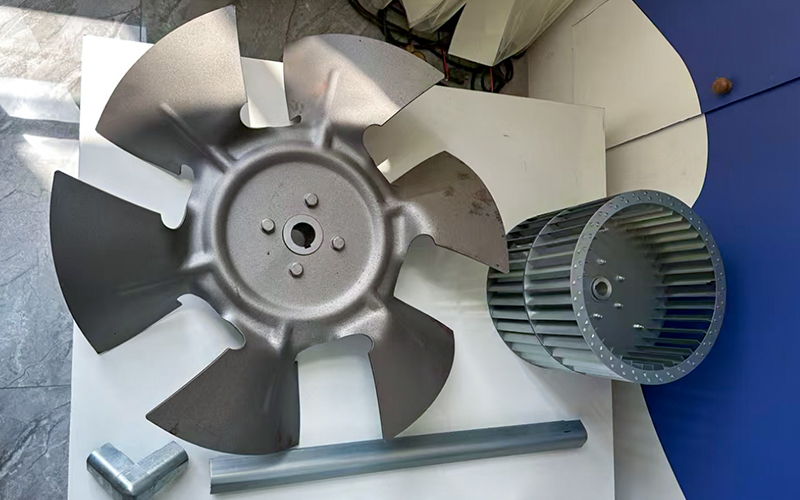
Understanding the three main categories ensures you select the correct equipment. Each type scales progressively in pressure capabilities and aerodynamic efficiency. We break down their mechanisms and ideal use cases below.
The mechanism relies on a simple blade mounted directly on a motor shaft. Manufacturers typically set these blades within a flat panel or a ring. The design remains incredibly straightforward and easy to manufacture. Maintenance crews can access the motor and blades without removing complex housing.
These units boast specific performance capabilities. They move massive volumes of air effortlessly. However, they operate at very low static pressures. Systems usually run under 0.5 inches of water gauge (wg). They cannot push air through long, restrictive ductwork.
Optimal use cases include open-air environments. You will see them utilized for wall-mounted warehouse exhaust. They handle roof ventilation tasks easily. Facilities also use them for non-ducted localized cooling stations. They excel anywhere air simply needs to move from one side of a wall to the other.
This design encloses the axial impeller within a cylindrical housing or tube. The tight clearance between the blade tips and the tube wall matters. This cylindrical enclosure significantly reduces air leakage at the blade tips. The air flows directly through the tube efficiently.
The enclosed mechanism upgrades the performance capabilities. It generates noticeably higher static pressure than a standard propeller fan. They overcome moderate resistance easily. This makes them highly suitable for short to medium duct runs.
You will find tubeaxial units in specialized environments. They dominate fume exhaust systems in chemical plants. Automotive shops use them in paint spray booths. They also drive industrial drying systems. The straightforward inline installation saves vertical and horizontal space.
The vaneaxial design builds upon the tubeaxial concept. It features stationary guide vanes built directly into the housing. These vanes sit directly behind the spinning impeller blades. They straighten the turbulent airflow exiting the blades. They also recover lost rotational energy efficiently.
These units deliver exceptional capabilities. They provide the highest static pressure among all axial designs. They also boast the highest aerodynamic efficiency. They often rival large centrifugal units in raw performance. They do this in a compact, inline footprint.
Optimal use cases demand high pressure. Commercial building HVAC systems rely on them heavily. They manage critical mining ventilation networks underground. You will also see them in highly ducted industrial exhaust systems. They handle complex, restrictive airflows gracefully.
| Fan Type | Static Pressure Capability | Aerodynamic Efficiency | Typical Application |
|---|---|---|---|
| Propeller Fan | Low (Under 0.5" wg) | Basic | Warehouse exhaust, wall cooling |
| Tubeaxial Fan | Medium (0.5" - 2.5" wg) | Moderate | Spray booths, short duct runs |
| Vaneaxial Fan | High (Up to 10" wg) | Excellent | Commercial HVAC, mining shafts |
Evaluating performance requires looking beyond basic dimensions. You must analyze specific aerodynamic and mechanical variables. This ensures the equipment operates efficiently within your facility constraints.
You must map the Airflow (CFM) versus Static Pressure (SP). Every facility has a unique system resistance curve. You plot this against the manufacturer's performance curve. This critical step prevents aerodynamic stalling. Stalling causes severe vibration and completely halts airflow delivery.
Drive configuration dictates maintenance schedules and motor lifespan. You must choose between direct and belt drives carefully.
Direct Drive: The motor connects directly to the impeller. This offers lower maintenance and highly efficient power transmission. However, it exposes the motor directly to the airstream. This becomes highly problematic for high-heat or corrosive gases.
Belt Drive: This setup keeps the motor outside the airstream. It protects the motor from harsh, contaminated exhaust. It also allows simple RPM adjustments via pulley changes. However, it incurs slight transmission losses and requires ongoing belt tensioning.
Blade pitch adjustability offers another critical dimension. Many premium units feature adjustable-pitch blades. You utilize these adjustable blades to modify performance variables post-installation. Facilities change configurations as their ventilation needs evolve. You accomplish this without replacing the entire expensive unit.
Regulatory and efficiency compliance guarantees safety. Always verify AMCA (Air Movement and Control Association) certifications. Check certifications for both sound profiles and air performance. This ensures vendor claims actually match real-world reality. Relying on uncertified equipment introduces major operational risks.
Installing large-scale ventilation equipment introduces physical realities. You must plan for acoustic, chemical, and spatial challenges. Ignoring these constraints leads to premature equipment failure.
The acoustic footprint and vibration levels demand attention. Vaneaxial units operating at extremely high speeds generate significant noise. Facilities must protect their workers from hearing damage. We strongly outline the necessity for sound attenuators or silencers. You should install reliable vibration isolators in sensitive environments. These mounts prevent structural vibrations from traveling through building steel.
Airstream contamination risks dictate material selection. Transporting particulate-laden, flammable, or corrosive air requires strict safety protocols. These environments dictate spark-resistant construction. You must specify AMCA A, B, or C spark-resistant ratings. You also need specialized blade materials. Manufacturers often supply cast aluminum or fiberglass-reinforced plastic blades to prevent dangerous sparking.
Clearance and spatial limitations influence installation layouts. Inline equipment absolutely saves floor space compared to bulky centrifugal units. However, they require highly specific upstream and downstream duct lengths. You must ensure uniform, non-turbulent airflow across the blades.
Common Mistake: Installing a sharp ductwork elbow directly before the fan inlet. This causes uneven blade loading and severe vibration.
Best Practice: Allow a straight duct run of at least three duct diameters upstream. Keep another straight run downstream before any turns.
Selecting the perfect Industrial Axial Fan requires a systematic approach. Follow this structured framework to narrow down your optimal choices.
Step 1: Define the Airflow Profile. You must calculate the required CFM accurately. Determine the maximum system static pressure based on your ductwork. Include the aerodynamic resistance of any installed filters or dampers.
Step 2: Assess the Operating Environment. Identify all temperature extremes present. Look for corrosive elements, caustic fumes, or heavy dust. Determine if the unit will run continuously or utilize an intermittent duty cycle.
Step 3: Evaluate Energy Efficiency. Look deeply into long-term operational costs. Weigh the lower upfront purchase price of a standard tubeaxial unit. Compare it against the massive long-term energy savings of a higher-efficiency vaneaxial model. Energy consumption dwarfs the initial purchase price over a decade.
Step 4: Vendor Engagement. Demand detailed, certified fan curves from the manufacturer. Request a localized application engineering review. Complete these steps before finalizing any procurement documents.
Selecting between propeller, tubeaxial, and vaneaxial units demands precision. It comes down to analyzing the specific intersection of pressure requirements. You must consider ductwork complexity and your harsh operating environment. Every facility presents unique aerodynamic challenges.
Take proactive action immediately. We encourage buyers to formally audit their current system static pressure. Consult directly with an industrial ventilation specialist. Professional guidance prevents costly over-specification. You will secure a highly efficient system tailored perfectly to your facility.
A: Axial fans move air parallel to the rotating shaft. They provide high-volume airflow at lower pressures. Centrifugal fans draw air into the center and discharge it perpendicularly. They deliver high static pressure but generally handle lower air volumes.
A: Yes. You can safely deploy them in hazardous environments. The unit must utilize a certified explosion-proof motor. It requires strict spark-resistant construction. You must also keep the drive mechanism completely isolated from the hazardous airstream.
A: Vaneaxial fans include stationary guide vanes. These vanes straighten the turbulent air exiting the spinning blades. This critical feature significantly increases static pressure capabilities. It also massively boosts overall energy efficiency for highly complex duct systems.


