


close
Choose Your Site
Global
Social Media

Views: 0 Author: Site Editor Publish Time: 2026-01-01 Origin: Site


Centrifugal fans are vital in industries, moving air or gases under pressure. They ensure effective ventilation in factories, commercial spaces, and industrial plants. This article focuses on the three main types of centrifugal fans—Forward Curved, Backward Curved, and Radial fans. We will explore their features, applications, and how to choose the right fan for your needs.
Forward Curved centrifugal fans are designed with blades that curve in the direction of rotation. These fans typically have a larger number of smaller blades that help them move a high volume of air at low static pressures. Their compact design makes them ideal for environments with limited space where low-pressure airflow is required.
Forward Curved fans work best in systems where large amounts of air need to be moved quickly, but without the need for high pressure. They are typically driven by AC motors, and their design ensures smooth operation with minimal vibration.
These fans are commonly used in HVAC systems, fan coil units, and air curtains, where high airflow is essential, but system resistance is low. They are also found in commercial ventilation systems, residential air conditioning, and cleanroom applications. Forward Curved fans are especially beneficial in environments where space is limited, and low-pressure airflow is needed.
| Aspect | Advantages | Disadvantages |
|---|---|---|
| Design | Compact Size: Ideal for installations in confined or small spaces. | |
| Noise Levels | Low Noise Operation: Suitable for noise-sensitive environments like offices or residential areas. | |
| Energy Efficiency | Energy-efficient: Well-suited for high-volume, low-pressure applications, helping to reduce overall energy consumption. | |
| Pressure Handling | Limited Pressure Handling: Not ideal for high-pressure systems; performance diminishes in high-resistance environments. | |
| Maintenance Needs | Accumulation of Dust & Debris: Blades can collect dust and debris, requiring regular cleaning and maintenance. | |
| Performance in Low-Pressure | Best for Low-Pressure Systems: Forward Curved fans excel in low-pressure applications, where airflow is crucial but system resistance is minimal. | |
| Applications | HVAC Systems, Fan Coil Units, Air Curtains, and other systems where low-pressure, high-volume air movement is required. | |
| Efficiency | Energy-efficient at Low Pressure: Ensures reduced operational costs in environments designed for high airflow and low static pressure. | |
| Effectiveness | Effective in Low-Resistance Environments: Provides reliable airflow in systems without significant air resistance or high-pressure demands. | |
| Technical Considerations | Ensure Low-Pressure Design: When implementing in HVAC systems, ensure the system is designed for low-pressure environments to avoid motor overload. |
Tip: When selecting Forward Curved fans for your HVAC system, ensure it is designed to handle low-resistance environments to maintain efficiency and avoid overloading the motor.
Backward Curved centrifugal fans feature blades that curve away from the direction of rotation. This blade design allows the fan to generate higher static pressures and maintain consistent airflow, even in more demanding conditions. These fans typically have fewer, longer blades compared to Forward Curved fans, which helps to reduce the noise generated during operation.
Backward Curved fans are known for their energy efficiency and ability to operate over a wide range of airflow rates, making them ideal for industrial applications.
Backward Curved fans are often used in industrial HVAC systems, air handling units (AHUs), and dust filtration systems. Their ability to handle high pressures makes them ideal for environments such as data centers, cleanrooms, and environments with fluctuating air pressures. These fans are also commonly used in industrial processes, including air pollution control and fume extraction.
| Aspect | Advantages | Disadvantages |
|---|---|---|
| Efficiency | Higher Efficiency: Reduces energy consumption, making it ideal for systems with energy efficiency needs. | |
| Pressure Handling | Handles Higher Static Pressures: Suitable for more demanding systems, ensuring consistent performance in high-pressure environments. | |
| Noise Levels | Low Noise Levels: Operates quietly, making it ideal for environments that require reduced noise levels, such as offices and cleanrooms. | |
| Size and Cost | Larger and More Expensive: Backward Curved fans are larger and come at a higher cost compared to Forward Curved fans. | |
| Maintenance Needs | Higher Maintenance: Due to the complexity of the blade design, these fans require more maintenance. | |
| Applications | Ideal for Industrial HVAC: Perfect for systems requiring high pressure and energy efficiency. |
Tip: Backward Curved fans are perfect for industrial HVAC systems where high pressure and energy efficiency are required.
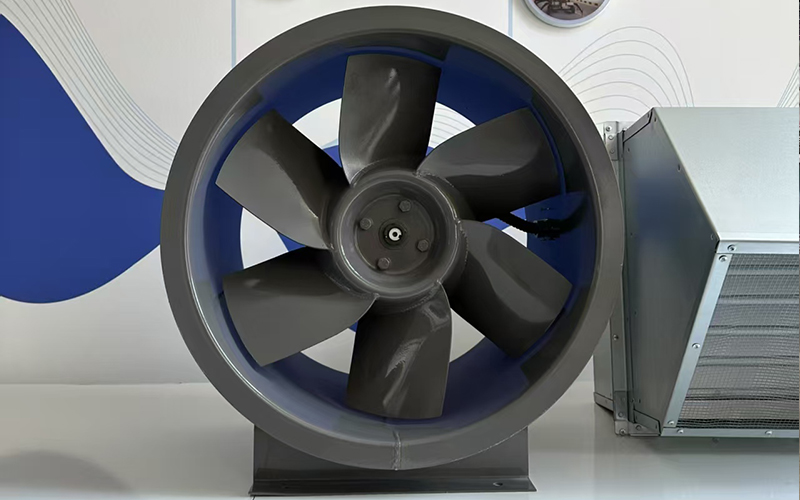
Radial centrifugal fans, also known as paddle-wheel fans, have straight blades that extend radially from the hub. These fans are designed to handle high-pressure systems and are often used in applications where dust, dirt, or other abrasive materials are present. The blades' robust construction allows them to withstand harsh conditions, making them highly durable and reliable.
Radial fans work by pushing air out at a 90-degree angle, which results in higher pressure generation but lower airflow compared to other fan types. They are particularly effective in systems that require high pressure over large distances.
Radial fans are ideal for industrial ventilation, material handling, and pneumatic conveying. They are commonly used in dust collection systems, high-temperature exhaust systems, and air filtration systems. Their ability to handle abrasive and particulate-laden air makes them perfect for environments such as manufacturing plants, mining operations, and woodworking facilities.
| Aspect | Advantages | Disadvantages |
|---|---|---|
| Durability | High Durability: Capable of handling harsh and abrasive air, making it ideal for demanding environments. | |
| Pressure Handling | Well-Suited for High-Pressure Environments: Effective in systems requiring high pressure, such as dust collection and fume extraction. | |
| Performance | Reliable Performance in Rugged Conditions: Performs well in challenging environments, ensuring consistent airflow in harsh conditions. | |
| Noise Levels | Higher Noise Levels: Due to the force required to move air through the fan, Radial fans tend to be noisier. | |
| Energy Efficiency | Less Energy-Efficient: Radial fans are generally less efficient compared to Backward Curved fans. | |
| Applications | Ideal for Harsh Environments: Perfect for environments with high-pressure requirements and particulate matter. |
Tip: Radial fans are an excellent choice for environments dealing with particulate matter, where durability and high pressure are key requirements.
When comparing the three types of centrifugal fans, the main differences lie in their ability to handle airflow and pressure. Forward Curved fans excel in high-volume, low-pressure systems, making them suitable for applications such as HVAC and ventilation. Backward Curved fans offer better performance at higher pressures and are ideal for environments with fluctuating airflows, such as industrial systems. Radial fans are best suited for applications requiring high pressure, particularly in harsh environments.
Backward Curved fans are the most energy-efficient among the three types, with a higher peak efficiency compared to Forward Curved fans. Radial fans, while durable, tend to be less efficient and require more maintenance. Forward Curved fans are easier to maintain but may experience performance degradation if used in high-pressure systems.
Forward Curved fans are best for clean environments with low to moderate pressure requirements. Backward Curved fans are suitable for more demanding industrial environments where energy efficiency and higher pressure capabilities are important. Radial fans are ideal for harsh environments with high particulate matter, but they come at the cost of higher noise and lower efficiency.
When selecting a centrifugal fan, it's essential to consider the required airflow and pressure for your system. Forward Curved fans work well in low-pressure systems, while Backward Curved fans are better suited for medium to high-pressure systems. Radial fans are ideal for high-pressure applications, especially in environments with higher resistance or particulate-laden air.
Forward Curved fans are more compact, making them ideal for systems with limited space. Backward Curved and Radial fans, being larger, require more installation space and may not be suitable for tight environments.
Backward Curved fans are the quietest, making them ideal for noise-sensitive environments. Forward Curved fans are also relatively quiet but are less efficient in high-pressure conditions. Radial fans tend to be louder due to the higher pressures they generate but are necessary for industrial applications requiring high resistance handling.
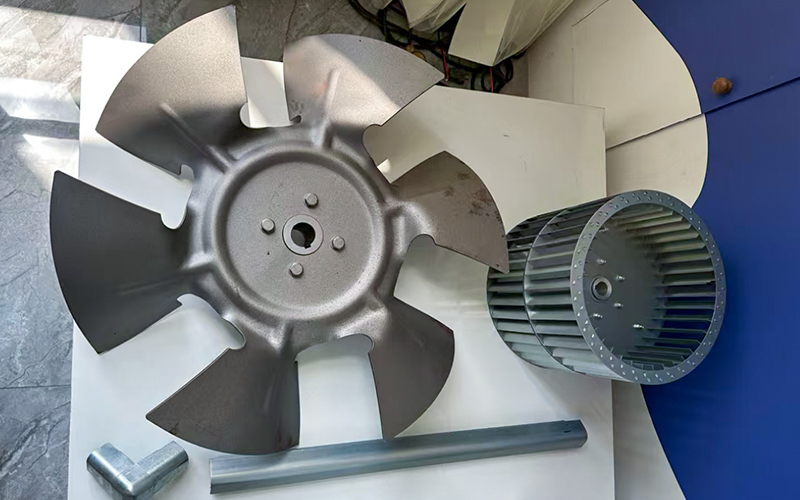
When selecting a centrifugal fan, it's crucial to evaluate the system’s specific needs. Factors such as airflow volume, static pressure, energy efficiency, space constraints, and acceptable noise levels must be balanced. High airflow requirements typically suit Forward Curved fans, while high-pressure systems demand Backward Curved or Radial fans. Understanding these parameters helps optimize performance and extends the fan's operational lifespan.
Selecting the right fan for your system requires matching its capabilities to the system's unique demands. Forward Curved fans excel in environments where high volumes of air are required with low-pressure resistance, ideal for ventilation. Backward Curved fans, with their high efficiency, handle medium to high-pressure needs, while Radial fans are better suited for systems that face high resistance, such as dust or fume extraction.
A reputable fan supplier can provide valuable expertise in selecting the correct fan type based on your system's operational needs. They offer not only the appropriate sizing and configuration but also help in customizing solutions for specific applications. Moreover, reliable suppliers ensure your fan’s long-term performance by advising on regular maintenance schedules, upgrades, and optimizing energy consumption.
Centrifugal fans are vital components in industrial ventilation and air handling systems. Each fan type—Forward Curved, Backward Curved, and Radial—offers unique advantages based on airflow, pressure, and efficiency requirements. Forward Curved fans excel in low-pressure environments, Backward Curved fans are ideal for high-efficiency and moderate-to-high pressure needs, and Radial fans are best for high-pressure, dusty environments. Zhejiang Rongwen Fan Co., Ltd. provides high-quality centrifugal fans designed to optimize airflow and energy efficiency across various applications. Their fans ensure reliable performance and durability, helping businesses meet their ventilation needs effectively.
A: A centrifugal fan is a mechanical device used to move air or gases by converting rotational energy into airflow. It is widely used in HVAC systems, industrial ventilation, and air filtration applications.
A: The three main types of centrifugal fans are Forward Curved, Backward Curved, and Radial fans. Each type differs in blade design and is suitable for different airflow and pressure conditions.
A: Choose a centrifugal fan based on airflow, pressure requirements, and efficiency needs. Forward Curved fans are best for low-pressure systems, Backward Curved for high-efficiency, and Radial for high-pressure applications.
A: Backward Curved fans offer high efficiency, low noise, and can handle higher static pressures, making them ideal for demanding industrial applications and environments requiring energy efficiency.
A: Yes, radial centrifugal fans are designed for high-pressure systems and are perfect for harsh environments, including those with high particulate matter, such as dust collection systems.


